---
title: "Housing Research: How Affordable Homes Strengthen People and Communities"
description: PAHRC’s 2026 Housing Impact Report explores how affordable housing supports 6.62 million households and strengthens communities nationwide.
image: https://blog.haigroup.com/hubfs/2026HIR_FeaturedImage.png
---
[Skip to content](https://blog.haigroup.com/housing-research-how-affordable-homes-strengthen-people-and-communities#main-content)
[](https://www.haigroup.com/)
- SEARCH
- [Research](https://blog.haigroup.com/tag/research)
# Housing Research: How Affordable Homes Strengthen People and Communities
- April 8, 2026

[Mike Torelli | Manager, Marketing and Communications | HAI Group](https://blog.haigroup.com/author/mike-torelli)
[\< Back to Resource Center](https://blog.haigroup.com)
Affordable housing plays a critical role in supporting residents and strengthening communities nationwide. As housing costs rise and demand continues to grow, understanding the full impact of these programs is essential for housing professionals, policymakers, and community leaders.
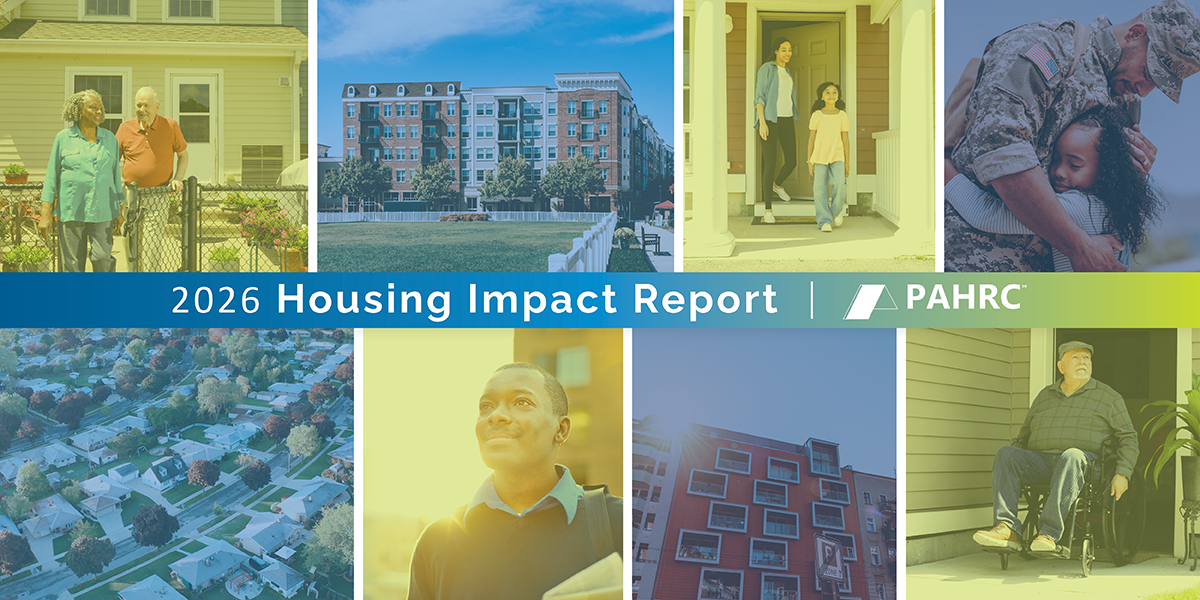
The [Public and Affordable Housing Research Corporation (PAHRC)](http://www.pahrc.org) 2026 Housing Impact Report, [How Affordable Homes Strengthen People and Communities](http://www.pahrc.org/research), provides a comprehensive, data-driven look at how affordable housing supports millions of households while contributing to broader economic and social outcomes. Drawing on national datasets and prior research, the report highlights both the scale of need and the measurable benefits of housing assistance programs.
[](https://blog.haigroup.com/hs/cta/wi/redirect?encryptedPayload=AVxigLKmNDyqDma6m3MRf7k8StBFieHtaNNnNAZbnlKqfs%2BNBGv3tbD0yeVi8ssq2rjoxDpU%2F0UOGhh2%2FuLpgdc9IM4ql3gOg5j3jeT2I60ILuvtKRpGHAuuQSNJMbsA8kvnB31dL2%2F9DpxdBIh0q5%2F449NPSHs9V%2FIgjmAqxcqTZ%2BXTYJkRWK%2FxZlaUIuqlYm24Hb1QTd4%3D&webInteractiveContentId=210284909826&portalId=20790879)
[](https://blog.haigroup.com/hs/cta/wi/redirect?encryptedPayload=AVxigLJhIeZ4qDNdnSasbnJkA0dMYmdIrqBp9revGu5YLRg75zCh1wTZZ7pGxfrvyLNaS7fjaVT3mOJBZ33zCB44GYdKU4M5mEhZDBWVjujTNXqnlxt2yMmuslwSTfp8eEoP4IhfGZzqT%2BTRF%2BzctKRNdq8Zy9D7ehhBV82Jw69997bi67d4vhvKwu1AkUZUjG0vEn7AhUaAmoC2ruu3ERcHmc0P1xZ8N5aG2LfGFYqIsqlL9H%2BkjBtZO6VCkhmyOxbQOKM2VyA9LTCR06c%3D&webInteractiveContentId=210655479870&portalId=20790879)
## What you'll learn
- Who affordable housing serves: Affordable housing programs support 6.62 million households nationwide, including older adults, people with disabilities, and families with children.
- Growing demand and limited supply: Demand for assistance continues to exceed availability, with only about one in four very low-income households receiving support.
- Wait times and access challenges: Households wait an average of 17 months for assistance, with wait times exceeding 3 years in some states.
- Work and participation trends: Most assisted households that can work are working, with 86% of non-disabled working-age households employed at some point during the last week or year.
- Length of assistance: The median household receives rental assistance for approximately 4 years.
- Community-level outcomes: Greater access to affordable housing is associated with lower rates of severe housing problems, including cost burden, overcrowding, and inadequate living conditions.
[](https://blog.haigroup.com/hs/cta/wi/redirect?encryptedPayload=AVxigLKmNDyqDma6m3MRf7k8StBFieHtaNNnNAZbnlKqfs%2BNBGv3tbD0yeVi8ssq2rjoxDpU%2F0UOGhh2%2FuLpgdc9IM4ql3gOg5j3jeT2I60ILuvtKRpGHAuuQSNJMbsA8kvnB31dL2%2F9DpxdBIh0q5%2F449NPSHs9V%2FIgjmAqxcqTZ%2BXTYJkRWK%2FxZlaUIuqlYm24Hb1QTd4%3D&webInteractiveContentId=210284909826&portalId=20790879)
## Why this matters
Affordable housing is more than a safety net. It is a foundation for stability, opportunity, and long-term community health.
The report reinforces that access to affordable housing is linked to improved housing stability, better health outcomes, stronger educational attainment, and increased economic mobility. By reducing housing costs, these programs allow households to allocate resources to essentials such as healthcare, education, and food, while also boosting local economic activity.
At the same time, the findings highlight a growing gap between need and availability. As housing costs rise and the population ages, affordable housing programs are increasingly serving households with the greatest needs, including older adults and people with disabilities. Millions of very low-income renters remain unassisted, facing ongoing housing challenges.
For housing organizations and decision-makers, these insights provide a clear foundation for planning, advocacy, and investment strategies that expand access and strengthen communities.
## Read the blog series
- [Your Guide to the Housing Impact Report’s Most Important Insights to Dispel Affordable Housing Myths](https://blog.haigroup.com/your-guide-to-the-housing-impact-reports-most-important-insights-to-dispel-affordable-housing-myths)
- [The Transformative Impact of Revitalizing Public Housing](https://blog.haigroup.com/the-transformative-impact-of-revitalizing-public-housing)
- [How Housing Impacts Health and Wellness](https://blog.haigroup.com/how-housing-impacts-health-and-wellness)
- [Unlocking Opportunity: A Tool to Help You Improve Upward Mobility](https://blog.haigroup.com/unlocking-opportunity-a-tool-to-help-you-improve-upward-mobility)
- [The Economic Impact of Building, Preserving, and Providing Affordable Housing](https://blog.haigroup.com/the-economic-impact-of-building-preserving-and-providing-affordable-housing)
- [Event Recording: Using Evidence to Build Stronger Affordable Housing Advocacy](https://blog.haigroup.com/making-the-case-research-to-strengthen-your-affordable-housing-advocacy)
- [Housing Fosters an Environment for Learning](https://blog.haigroup.com/housing-fosters-an-environment-for-learning)
- [Myth vs. Reality: Data-Driven Insights on Affordable Housing](https://blog.haigroup.com/myth-vs.-reality-data-driven-insights-on-affordable-housing)
- [Public Housing Authorities Making a Difference Through Partnerships](https://blog.haigroup.com/public-housing-authorities-making-a-difference-through-partnerships)
## Access more resources
Read the full Housing Impact Report at [www.pahrc.org/research](http://www.pahrc.org/research). Explore additional resources and companion blogs that examine key trends and findings in more detail.
## Stay connected
Sign up for updates from our blog to stay ahead of emerging trends in insurance, risk management, online training, and affordable housing research, and gain access to the latest resources and tools.
[](https://blog.haigroup.com/hs/cta/wi/redirect?encryptedPayload=AVxigLIdtHnmA0EcHUjtYJSTskBVEPc63AVOej1epRb9zHwdG%2FixcIVpURxli%2BrUkWfug8QPcQE9jW2nP1o8%2BkJpWfn5PvW6Wbk9qQGEhfm%2FM77qyjzbeCqh8ZM1QeNwCrzaCsNLE7NIw7b9XUOgg9LcS3k0dQiItjmjtQbaOr%2BO8ZmSAXgVYwOpKjdCitm66VisHtRMo4%2B7%2B3aCH9erTe5f%2BJfcX9JFvgW07Ih1c8zc&webInteractiveContentId=183599808655&portalId=20790879)
The information presented is for general reference only. HAI Group makes no representation or warranty about the accuracy or applicability of this information for any particular use or circumstance. Your use of this information is at your own discretion and risk. HAI Group and any author or contributor identified herein assume no responsibility for your use of this information. You should consult with your legal, professional or subject matter advisor before implementing any new strategy or policy.
HAI Group® is the registered trademark of Housing Authority Risk Retention Group, Inc. and its related companies. For a complete list of HAI Group companies, visit www.haigroup.com. Products or services may not be available in all jurisdictions. Certain property and casualty coverage may be provided by a risk retention group or a surplus lines insurer or by a third party. Risk retention groups and surplus lines insurers do not participate in state guaranty funds and their insureds are not protected by such funds.
Don't Miss This
## Related Content
[](https://blog.haigroup.com/your-guide-to-the-housing-impact-reports-most-important-insights-to-dispel-affordable-housing-myths)
- April 8, 2026
### [Your Guide to the Housing Impact Report’s Most Important Insights to Dispel Affordable Housing Myths](https://blog.haigroup.com/your-guide-to-the-housing-impact-reports-most-important-insights-to-dispel-affordable-housing-myths)
April 8, 2026
If you’re an affordable housing provider, knowing current facts about who needs and uses affordable housing is...
[Read more](https://blog.haigroup.com/your-guide-to-the-housing-impact-reports-most-important-insights-to-dispel-affordable-housing-myths)
[](https://blog.haigroup.com/spotlight-on-pahrc-in-affordable-housing-news-for-public-housing-preservation-research)
- April 8, 2026
### [Spotlight on PAHRC in Affordable Housing News for Public Housing Preservation Research](https://blog.haigroup.com/spotlight-on-pahrc-in-affordable-housing-news-for-public-housing-preservation-research)
January 8, 2026
The Public and Affordable Housing Research Corporation (PAHRC), HAI Group’s research division, was recently featured in...
[Read more](https://blog.haigroup.com/spotlight-on-pahrc-in-affordable-housing-news-for-public-housing-preservation-research)
[](https://blog.haigroup.com/get-to-know-the-public-and-affordable-housing-research-corporation-pahrc)
- April 8, 2026
### [Get to Know the Public and Affordable Housing Research Corporation (PAHRC)](https://blog.haigroup.com/get-to-know-the-public-and-affordable-housing-research-corporation-pahrc)
May 1, 2025
At a time when a safe and affordable place to call home is out of reach for more than 15 million Americans, the...
[Read more](https://blog.haigroup.com/get-to-know-the-public-and-affordable-housing-research-corporation-pahrc)

- [Online Privacy Policy](https://www.haigroup.com/privacy-policy/)
- [California Privacy Rights](https://www.haigroup.com/wp-content/uploads/2024/11/HAI-Group-CA-Privacy-Rights-Notice-1.pdf)
- [Terms of Use](https://www.haigroup.com/terms-of-use/)
```json
{
"@context" : "https://schema.org",
"@type" : "BlogPosting",
"author" : {
"@type" : "Person",
"name" : "Mike Torelli | Manager, Marketing and Communications | HAI Group",
"url" : "https://blog.haigroup.com/author/mike-torelli"
},
"dateModified" : "2026-05-19T20:07:54.813Z",
"datePublished" : "2026-04-08T11:44:59.000Z",
"headline" : "Housing Research: How Affordable Homes Strengthen People and Communities",
"image" : [ "https://blog.haigroup.com/hubfs/2026HIR_FeaturedImage.png" ],
"mainEntityOfPage" : {
"@id" : "https://blog.haigroup.com/housing-research-how-affordable-homes-strengthen-people-and-communities",
"@type" : "WebPage"
},
"publisher" : {
"@type" : "Organization",
"logo" : {
"@type" : "ImageObject",
"url" : "https://blog.haigroup.com/hubfs/HAIGroup%20PMS2186C%20400X100-300dpi-1.png"
},
"name" : "HARRG"
}
}
```