
Advocacy is more powerful when it is grounded in evidence. That was the focus of PAHRC’s recent live virtual session, Making the Case: Research to Strengthen Your Affordable Housing Advocacy. The session explored how research and data can help housing professionals, advocates, and community partners build a stronger case for developing and preserving affordable housing.
Led by PAHRC Director of Research Kelly McElwain and Research Analyst Cate Asp, the session highlighted actionable findings from PAHRC’s latest Housing Impact Report, along with tools participants can use to quantify housing need, dispel misinformation, estimate preservation needs, and demonstrate the economic and social returns of affordable housing.
Watch the full recorded session to hear the discussion and see examples of how these resources can be used in conversations with policymakers, funders, and community stakeholders.
What the session covered
Affordable housing conversations are often shaped by misconceptions about who receives assistance, why assistance is needed, and how affordable homes affect the broader community. The session focused on using research to move conversations away from assumptions and towards evidence.
McElwain and Asp shared findings from the 2026 Housing Impact Report, How Affordable Homes Strengthen People and Communities, as well as other industry research, that can help advocates explain the realities facing affordable housing residents, the challenges they encounter, and the measurable benefits affordable housing can provide to families and communities.
Key topics included:
- Who affordable housing serves, including older adults, individuals with disabilities, children, veterans, and working households.
- Why employment does not always lead to housing stability, especially when wages, caregiving responsibilities, and housing costs are factored in.
- How affordable housing can support community outcomes, including economic activity, educational attainment, health, and long-term stability.
- Why preserving existing affordable homes is critical, as many properties approach the end of their affordability restrictions.
- How local data tools can help advocates better understand housing need and communicate that need more effectively.
Using research to dispel affordable housing myths
One major theme from the session was the importance of addressing common myths with credible, accessible data.
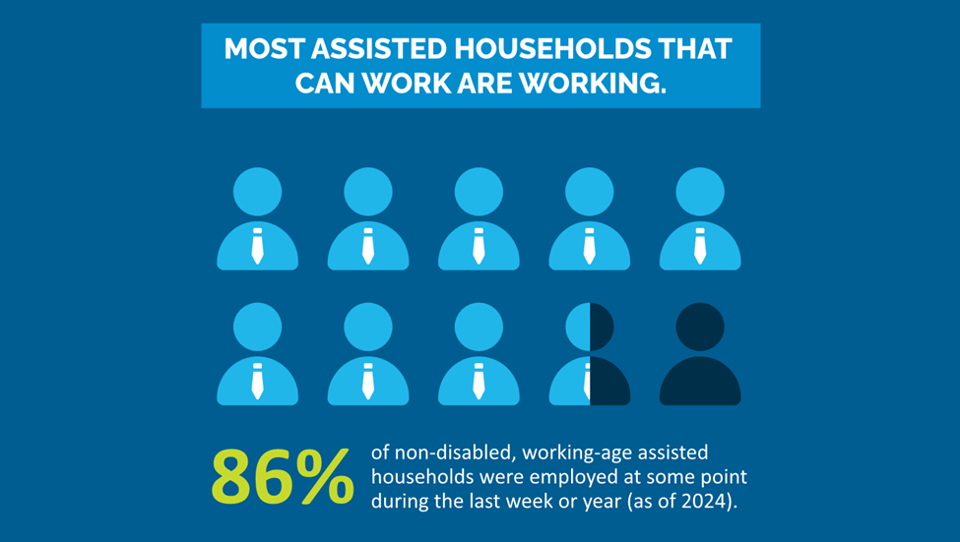
For example, McElwain and Asp discussed the misconception that affordable housing residents do not work or remain on assistance indefinitely. In reality, many households served by affordable housing include older adults, individuals with disabilities, children, and caregivers. Among households that include at least one working-age, non-disabled member, the vast majority are working or have worked recently.
The session also emphasized that the benefits of affordable housing extend beyond the households receiving assistance. Research shows that stable, affordable homes can contribute to stronger educational outcomes, better health, reduced public system costs, and local economic activity.
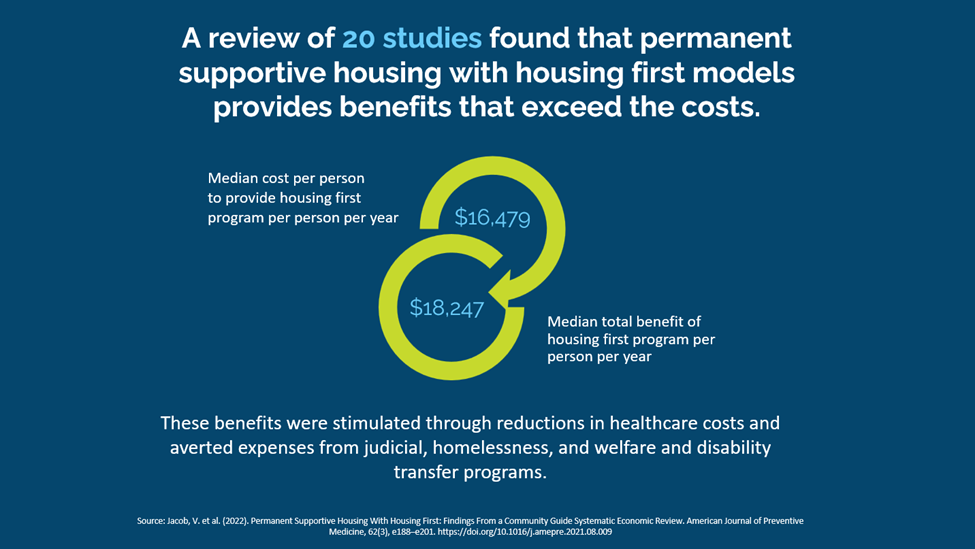
For advocates, these findings can help shift the conversation away from stigma and toward a fuller understanding of affordable housing’s role in building stronger communities.
Tools to help quantify affordable housing need
Several data tools and resources were introduced that can help organizations understand housing needs in their communities and communicate those needs to different audiences.
These tools included:
Questions from the session
How can I quantify the need for affordable housing programs in my community?
A strong advocacy case often combines local data with real stories from the people and communities served. Data can help demonstrate the scale of the challenge, while stories help show what those numbers mean in daily life.
Housing organizations can begin by identifying the number of households and individuals they serve, who those households are, and what partnerships or services help support positive outcomes. Organizations may also use research from PAHRC and other sources to connect local needs to broader findings on housing stability, health, education, and economic impact.
How can I find a housing authority in my area?
HUD maintains a list of housing authorities across the country, including contact information. This can be a helpful starting point for identifying regional housing partners, especially for organizations looking to connect residents with housing resources or build partnerships around local needs.
Housing authorities can be valuable partners because they often serve households with the greatest housing need and can help community organizations better understand local challenges, available programs, and service gaps.
How do I find out how many affordable homes are in my community?
The National Housing Preservation Database (NHPD) is a strong place to start. It provides consolidated and deduplicated information on federally assisted rental homes across the country. Users can filter by geography, including state, county, and congressional district, to better understand the federally assisted housing stock in a specific area.
For users looking for a more summarized view, the NHPD website also includes preservation toolkits and dashboards. The toolkits can be summarized to your area of interest and help local advocates and planners understand affordable housing stock, assess preservation risks, and identify opportunities to strengthen local preservation efforts.
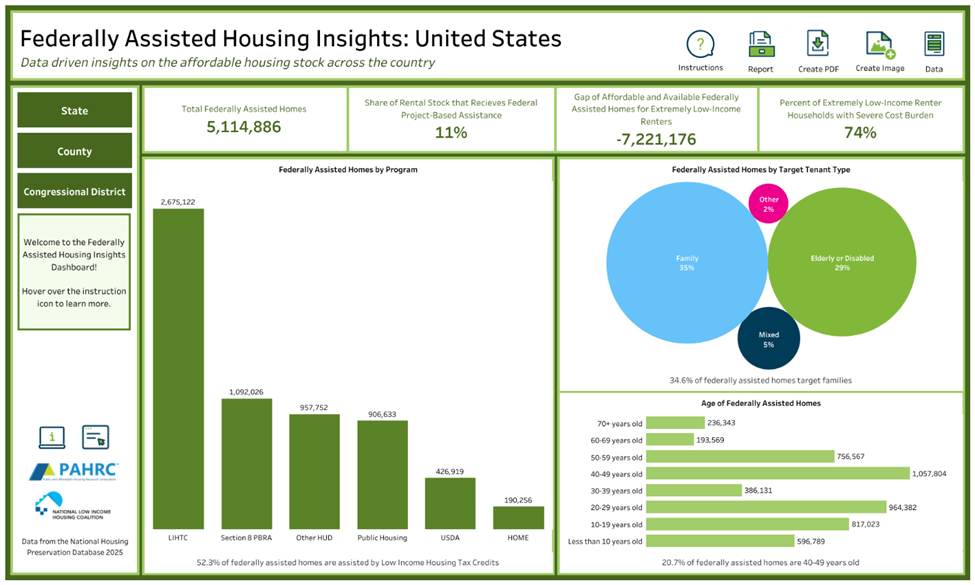
Federally Assisted Housing Insights Dashboard
Is there a tool that shows vacancy rates in affordable housing?
There are several resources that can help users explore vacancy data, though each has limitations. The American Community Survey and HUD’s USPS Vacancy Database can provide broader geographic vacancy information. For affordable housing specifically, HUD’s Picture of Subsidized Households dataset includes an occupancy rate field at the property level.
When using vacancy data, context matters. Data may lag, and a vacant unit may not always mean a unit is available for immediate move-in. A property may be undergoing redevelopment, recovering from damage, or experiencing another temporary condition that affects occupancy.
How can tenant-led organizations identify affordable housing at risk and take action early?
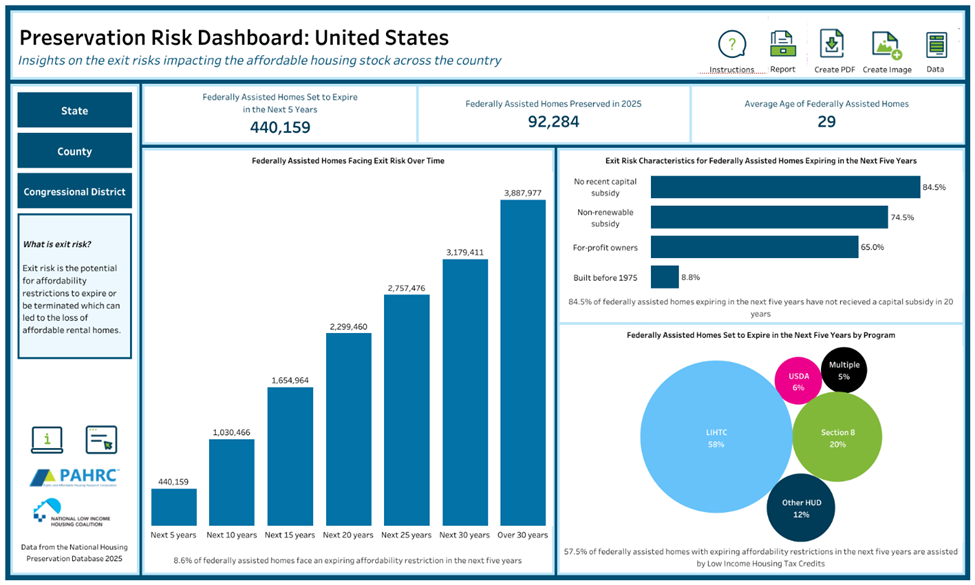
Tenant-led organizations can use the NHPD to identify and quantify homes nearing the end of their affordability restrictions. Within the NHPD, users can filter properties by location, property status, and latest end date to identify homes with affordability restrictions expiring in the coming years.
This information can support early outreach and coordination with local partners. In some cases, owners may plan to renew affordability commitments or use new funding to preserve the property. In other cases, early action may help tenants, advocates, and community organizations connect owners with resources, technical assistance, or preservation strategies.
How can I use the Neighborhood Opportunity Search Tool?
The Neighborhood Opportunity Search Tool helps users explore where affordable homes are located in relation to neighborhood opportunity indicators. The tool includes information related to health outlook, educational opportunities, labor market access, transit access, and neighborhood desirability.
Housing providers and advocates can use the tool to support mobility counseling, guide reinvestment strategies, and identify community assets or gaps. For example, a provider serving older adults may focus on health outlook and transit access, while another organization may use the tool to identify where additional services or partnerships could strengthen neighborhood outcomes.
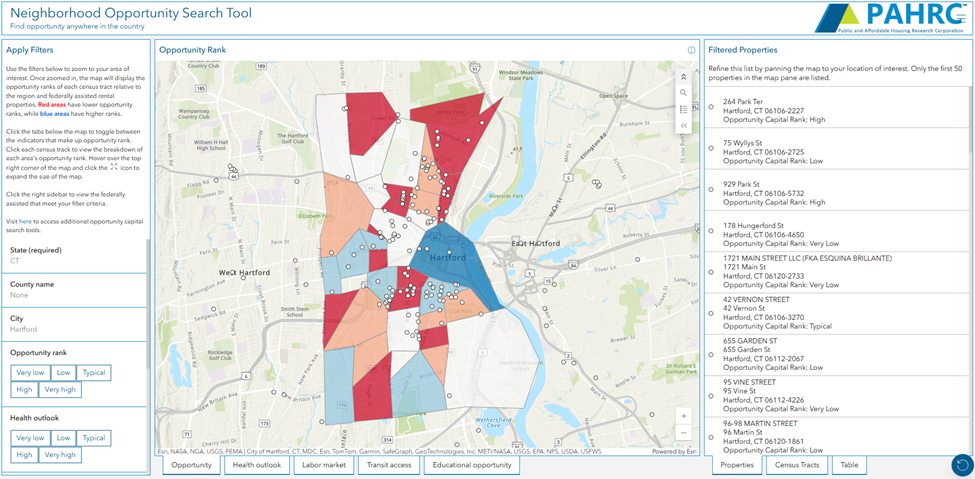
The Neighborhood Opportunity Search Tool filtered to Hartford, CT.
Continue exploring the Housing Impact Report blog series
To learn more, read PAHRC’s Housing Impact Report blog series:
-
Housing Research: How Affordable Homes Strengthen People and Communities
-
Your Guide to the Housing Impact Report’s Most Important Insights to Dispel Affordable Housing Myths
-
Unlocking Opportunity: A Tool to Help You Improve Upward Mobility