
Across the country, public housing authorities (PHAs) are partnering to pair the affordable homes they manage with services to create a foundation for residents to improve their health, educational, and economic opportunities. From mobile health clinics in Connecticut to youth engagement programs in Alabama, PHAs establish partnerships that help families stay healthy, children succeed in school, and veterans find stable homes.
In the seventh edition of our Housing Impact Report blog series, we spotlight innovative partnerships that PHAs are creating in their communities to improve health, education, economic opportunity, and stability.
Partnerships for improving resident outcomes
PHAs are deeply engaged in providing resident services that go beyond housing. In fact, a survey of 178 PHAs found that approximately half offer health-related initiatives, while a separate survey of 342 PHAs found that a similar proportion provide at least one education program. For PHAs administering health initiatives and education programs, 91% and 89% reported relying on partnerships to support this work.
Healthcare
Access to stable, affordable housing is associated with improved health outcomes for residents. PHAs are increasingly amplifying this connection by partnering with local healthcare providers to bring services directly to residents.
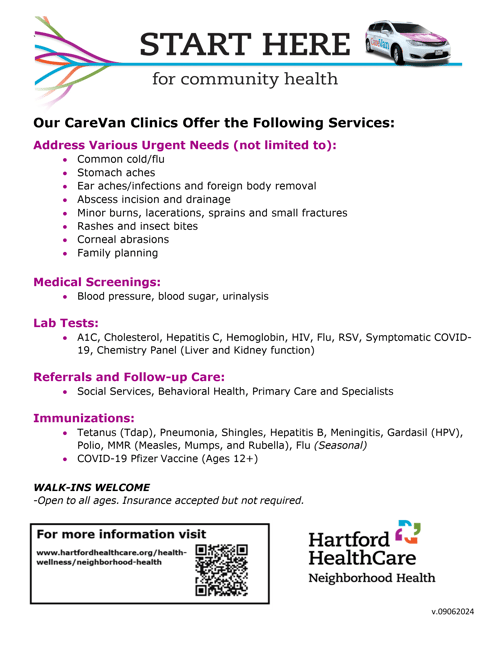
For example, the Housing Authority of the City of Bristol has teamed up with Hartford Healthcare to operate a mobile health clinic, bringing services directly to residents and staff. This collaboration allows families and older adults to access convenient care, preventative services, vaccinations, health education, and more. Residents who have taken advantage of this program report that on-site access helps reduce barriers related to transportation and cost, giving them more control over their health and improving their overall well-being. Whether it is a medical screening for blood pressure, a lab test for cholesterol, or referrals to behavioral health specialists, residents and staff alike can access convenient care due to the partnership.
 Education
Affordable housing helps families improve their safety and stability, which supports better educational outcomes for children. These outcomes can be bolstered by the strategic partnerships that PHAs establish.
The Huntsville Housing Authority’s (HHA) Youth Basketball and Education Initiative in Alabama is a prime example of this. By combining basketball with mentorship and academic support, the program, in collaboration with Man Up! Inc., helps young residents improve their grades and school attendance while fostering connections among peers. Nearly half of all participants end up making the honor roll, and many get involved in STEM-related extracurriculars. Testament from Dr. Frederick Whitlo, HHA's Youth and Family Services coordinator, speaks for itself.
“This program has really evolved into something that we believe, and I know, is going to be transformative not only in nature, but in their education journey, in their academics, in their ability to be productive citizens in this city and around the world. We know they are going to do great things.”
Initiatives like HHA’s Youth Basketball and Education program highlight how PHAs providing additional supportive services create real, positive changes in the lives of their residents.

Economic mobility
Affordable housing also supports improved employment outcomes over time, particularly for children who grow up in these homes. Many PHAs across the country partner with workforce development organizations to expand job opportunities to their residents and improve economic mobility.
The Housing Authority of Champaign County (HACC) Career and Resource Connection Initiative does just that, linking residents to local employers through hybrid job fairs. In addition, workshops in partnership with East Illinois Worknet, like the Resume to Reality series—which provides lessons in resume writing, interview skills, and workplace expectations—help equip residents to overcome employment barriers and improve their economic stability. Through these programs, HACC demonstrates how housing and employment programs can work together to connect residents to vital resources that encourage career growth.
Housing stability
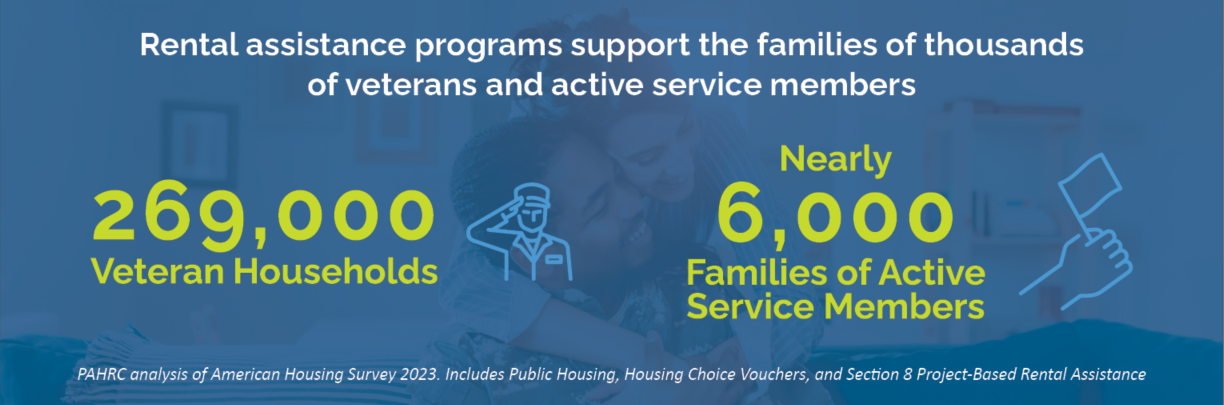
Stable, affordable housing provides residents with a foundation that reduces the risk of homelessness and promotes long-term security and mobility. Affordable housing is critical to veterans across the country who are often more prone to housing insecurity and homelessness, despite declining rates of homelessness for veterans year-over-year. In fact, rental assistance programs supported over 269,000 veteran households and nearly 6,000 families of active service members in 2023.
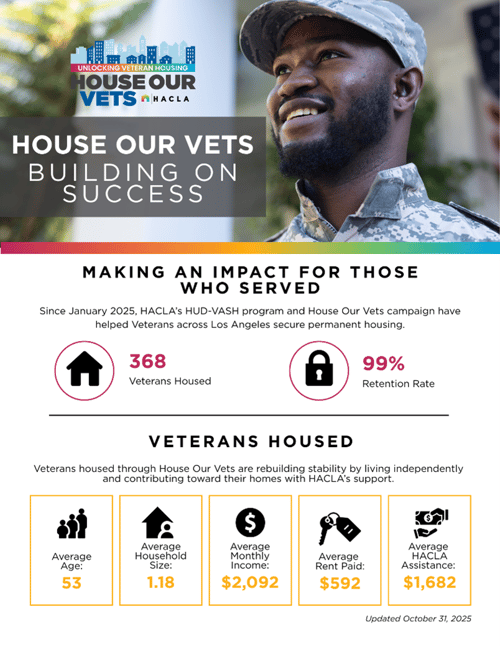
To combat the unique challenges veterans face, many PHAs are supporting veterans through targeted partnerships. For example, the Housing Authority of the City of Los Angeles’s (HACLA) House Our Vets campaign has a track record of directly uplifting veterans in their community. This program, which uses partnerships with the local government, community landlords, and the VA Greater Los Angeles Healthcare System, pairs HUD-Veterans Affairs Supportive Housing (HUD-VASH) vouchers with landlord incentives, streamlined inspections, and VA collaboration to quickly house veterans and connect them to supportive services. Through on-the-spot voucher events, HACLA gives veterans the opportunity to find a home in real time, introducing them to landlords ready to provide housing. Since launching, House Our Vets has successfully housed hundreds of veterans, demonstrating how coordinated partnerships can directly improve housing stability for those who have served.
Similarly, the Pinellas County Housing Authority (PCHA) partners with the VA Bay Pines Health Care System and local nonprofits to support veterans transitioning out of homelessness. By combining housing, health services, and substance use support, PCHA ensures veterans have access to safe, stable, and affordable housing in their communities.
Resident services provide returns on investment
Resident services do more than provide communities with critical support and access to opportunity – they also create measurable financial returns for PHAs. In fact, service-enriched properties generate higher net operating income on average, with every $100 invested generating $259 in net operating income.
Beyond creating returns on investment and improving residents’ lives, supportive services can generate positive community outcomes. Research shows that stable, affordable housing and service coordination reduce healthcare expenditures by reducing emergency room visits and lowering hospitalization rates. When residents receive support that helps them improve job skills or advance their career, they may increase their earnings and participate more in the local economy, creating broader positive community impacts.
Lessons to support establishing partnerships to improve resident outcomes
These programs are just a few examples of how PHAs are establishing partnerships to bring opportunity to their residents. Across the country, housing providers are working with healthcare organizations, workforce development providers, and local nonprofits to expand the resources available to residents and strengthen the communities they serve.
Drawing on findings from Health Starts and Home and PHA Pathways for Advancing Equity, as well as lessons from community revitalization efforts in New England, PHAs have several key takeaways for housing providers seeking to expand their impact in their communities.
Start by identifying partners that bring key expertise and resources that your organization may not have internally
Many PHAs rely on partnerships with healthcare providers, public health agencies, and social service organizations to improve resident health outcomes. Collaborating with organizations that already specialize in health care, education, or workforce development can help PHAs expand services for residents while also bolstering relationships with community organizations. Tips for cultivating partnerships include joining local committees, boards, and working groups, and starting with small-scale or one-time programs. To nurture partnerships, train staff, schedule regular check-ins, clarify each organization’s roles and responsibilities, and share success stories.
Create spaces within your community where partners can deliver services
Physical spaces such as community centers can serve as hubs for residents to access vital programs. In Worcester Housing Authority’s case, they created a new Economic Opportunity Center as part of their revitalization efforts that offers residents workforce development opportunities, job training, digital literacy, and resident services. Providing an accessible location for programming can help partners reach residents more effectively.
Engage residents early to build trust and strengthen programs
The redevelopment of Newport’s North End shows that successful initiatives often depend on relationship building with residents. Building trust through transparent communication, involving residents in planning, and prioritizing residents can increase their support and participation in both revitalization efforts and new programs.
Use data to identify gaps and guide decisions
PHAs can improve resident outcomes by collecting and analyzing demographic, housing, and service data. This information may reveal gaps in access to programs and resources, inform where to best focus efforts, and help measure the effectiveness of programs, policies, and practices. Having a data collection process in place allows PHAs to use hard evidence to drive decision-making and demonstrate their impact to stakeholders.
Ready to learn more?
Download the Housing Impact Report for more data to dispel myths and demonstrate the impact of affordable housing.

Download Health Starts at Home to learn more about how housing providers are working to establish partnerships and improve resident health outcomes.
Download PHA Pathways to Advancing Equity to explore more examples of programs, policies, and practices that PHAs have established to improve educational outcomes, employment opportunities, and more.