
Affordable housing does more than provide shelter. It plays a direct role in improving physical and mental health outcomes for millions of people.
In the third edition of our Housing Impact Report blog series, we share the latest research you can use in your advocacy to demonstrate how affordable housing impacts health and wellness.
Affordable housing is a lifeline for people impacted by health setbacks
Affordable housing is a safety net for people experiencing health challenges. Research shows that while older adults in federally assisted homes report higher rates of chronic conditions, most residents were in poor health prior to seeking assistance. Likewise, children living in affordable homes report higher rates of learning disabilities and conditions that make academic achievement more difficult. These findings underscore the vital role affordable housing plays in supporting the most vulnerable community members.
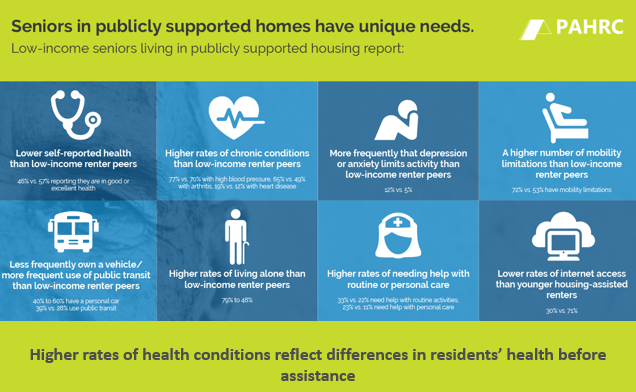
Source: PAHRC. (2020). The Security of Home: How Rental Assistance Provides Low-Income Seniors with a Healthier Future.
Ruel, E., Oakley, D., Wilson, G.E. et al. (2010). Is Public Housing the Cause of Poor Health or a Safety Net for the Unhealthy Poor? J Urban Health 87, 827–838.
Economic stability is a social determinant of health
Stable, affordable homes keep rent within reach, which allows families to allocate more of their income toward food, healthcare, and education. These programs also reduce the likelihood that people face eviction, experience homelessness, and live in overcrowded homes, which are linked to poorer health outcomes.
These impacts carry significant costs. Housing instability among mothers and children is estimated to cost the U.S. $111 billion in avoidable medical and educational expenses between 2016 and 2026. Expanding access to affordable housing can improve social determinants of health, which are estimated to impact 80 to 90% of a person’s health outcomes.
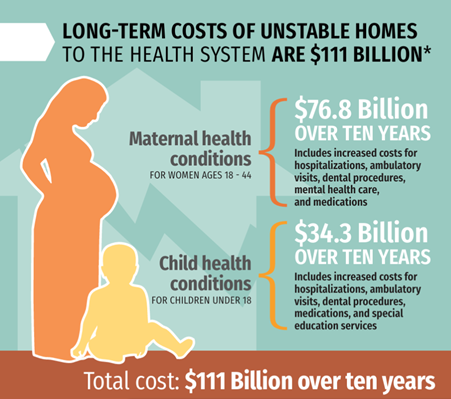
Source: Children’s Health Watch. (2018). Stable Homes Make Healthy Families.
Affordable homes help older adults age in place
Older adults living in these homes are more likely to be connected to healthcare systems, receive mental health support, access in-home care, and maintain stronger social networks compared to their low-income unassisted peers. Many also benefit from accessibility features that support independence.
By providing these essential supports, stable housing empowers older adults to maintain their independence and well-being as they age.
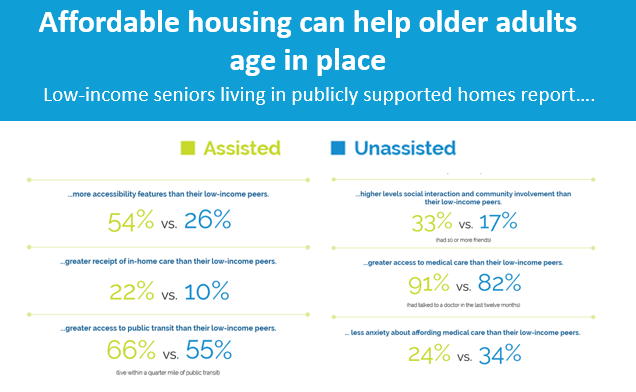
Source: PAHRC. (2020). The Security of Home.
When people live in homes they can afford, their health outcomes improve
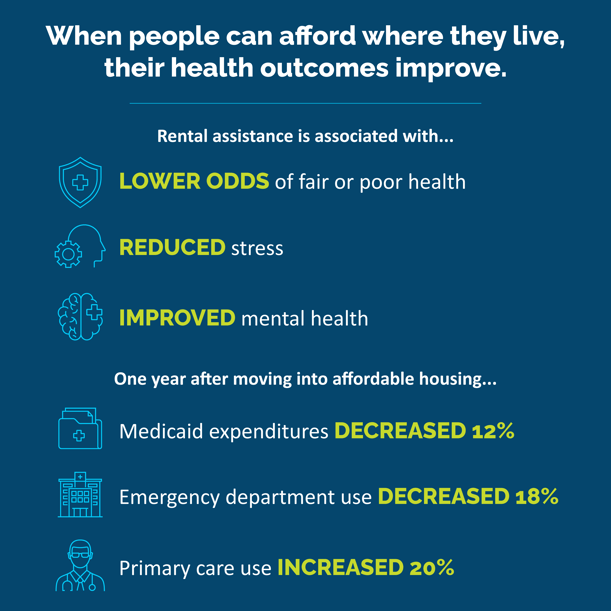
Access to stable housing is linked to better overall health outcomes. Residents in public and multifamily housing have reduced odds of experiencing fair or poor health compared to future residents. Rental assistance can also reduce stress and improve mental health. For example, mothers with young children who used a Housing Choice Voucher for one year experienced a 50% decrease in hypertension and a 7% drop in stress.
Compared to usual care, offering long-term housing subsidies to families reduced psychological distress, food insecurity, and incidence of intimate partner violence. Affordable housing also leads to higher utilization of primary care and a reduction in overall emergency service costs. One year after moving into affordable housing, Medicaid recipients used the emergency department 18% less, experienced a 12% drop in Medicaid expenses, and used primary care services 20% more.
Beyond improving outcomes, stable housing can also change how and where residents access care.
Sources: Center for Outcomes Research and Education (CORE). (2016). Health in Housing: Exploring the Intersection between Housing and Health Care.; Fenelon, A., Mayne, P., Simon, A. E., Rossen, L. M., Helms, V., Lloyd, P., Sperling, J., & Steffen, B. L. (2017). Housing Assistance Programs and Adult Health in the United States. American Journal of Public Health, 107(4), 571–578.; DeVoss, R., Auerbach, J., Banacos, N., Burnett, A., Oke, O., Pease, S., Welton-Mitchell, C., Westbrook, M., & Dickinson, K. L. (2022). What is known about mental health and US federal housing subsidy programs? A scoping review. SSM - Mental Health, 2, 100155.
Affordable housing can serve as a nexus to expand access to healthcare
Affordable housing also opens doors to better healthcare access. Non-disabled adults who moved into HUD-assisted homes had lower uninsurance rates and unmet needs for healthcare due to costs compared to future residents.
Further amplifying the impact of affordable homes, half of public housing authorities (PHAs) work with local partners to bring health initiatives directly to their residents, making care more accessible. These programs range from service coordination and health screenings, like Rutland’s Support and Services at Home, to housing design and maintenance standards, like Boston Housing Authority’s Health Homes Initiative.
Takeaways for housing providers
Partner with Health Providers to Expand Resident Support
Collaborating with health organizations can be mutually beneficial. Public Housing Authorities can offer healthcare providers streamlined access to populations facing health disparities, community space for programming, and support in addressing social determinants of health. Meanwhile, healthcare providers can connect residents to on-site clinics, health screenings, and mental and physical health programs, and unlock data to help your organization understand health disparities. To learn more about launching a health partnership, visit LeadingAge’s Housing and Health Care Partners Toolkit.
Strengthen Service Coordinators to Reduce Hospital Visits
Access to on-site service coordinators reduced acute inpatient hospital visits among older adults in federally assisted homes by 18%. Strengthening service coordination through programs such as HUD's Multifamily Housing Service Coordinator and the Resident Opportunities and Self-Sufficiency (ROSS) grant program can help your residents age in place.
Focus Programs on Residents with the Greatest Health Needs
If your goal is to maximize impact, consider prioritizing residents with the highest healthcare utilization. Targeted programs can drive more meaningful improvements in health and wellness outcomes.
Ready to learn more?
Download the Housing Impact Report for more data to dispel myths and demonstrate the impact of affordable housing.

Access Partnering for Strategy Wellness to learn more about how you can create a health initiative.