

For housing organizations, Occupational Safety and Health Administration (OSHA) compliance is about more than avoiding citations. OSHA standards are designed to protect workers from injury, illness, and death while helping organizations build safer, more resilient operations.
At the 2026 Connecticut Chapter of the National Association of Housing and Redevelopment Officials (CONN NAHRO) Annual Convention and Exhibition, the Workers' Compensation Trust highlighted the OSHA violations it most frequently encounters among housing organizations and shared practical strategies for reducing risk.
Housing organizations face a unique mix of workplace hazards. Staff may be responsible for maintaining occupied residential buildings, overseeing contractors, responding to resident concerns, managing maintenance shops, conducting renovations, and supporting community facilities. Those responsibilities create safety challenges that often extend beyond what employees encounter in a traditional office environment.
The top OSHA standard violations by housing organizations
During the session, Vice President of Loss Control Services Pamela Hunter noted that many OSHA standards exist because injuries revealed patterns that regulators ultimately addressed through safety requirements.
"Something happened to somebody. They saw a pattern,” Hunter said. “When you think about chemical safety…that's because people were getting injured with chemicals."
Continue reading to discover the most frequently cited OSHA standards in multifamily housing organizations.
Portable fire extinguishers
 The most frequently cited OSHA standard affecting housing organizations involves portable fire extinguishers. OSHA requirements address placement, accessibility, maintenance, testing, and employee training. Extinguishers must be clearly identified, easily accessible, and free from obstructions.
According to Loss Control Consultant Emily Gordon, violations often stem from blocked extinguishers, missing inspection records, damaged equipment, and confusion over employee responsibilities during an emergency.
"We don't want somebody who's not supposed to be picking up an extinguisher trying to fight a fire when they're not trained in it," Gordon said.
Housing organizations can reduce risk by:
- Conducting and documenting monthly inspections
- Keeping extinguishers visible and unobstructed
- Verifying annual servicing is completed
- Aligning extinguisher programs with emergency action plans
Hazard communication
 Hazard communication requires organizations to identify chemical hazards and communicate them through written programs, inventories, labels, safety data sheets (SDSs), and employee training.
Maintenance and custodial employees regularly work with cleaners, paints, solvents, fuels, pesticides, and other hazardous products. Gordon said organizations need visibility into every chemical entering the workplace.
"A worker could buy a chemical and bring it into the workplace, and then it’s not properly tracked,” Gordon said. “Something like a cleaner, or something being purchased at a regular store, does not automatically mean it should not be included in your hazard communication.”
Common violations include unlabeled containers, outdated inventories, inaccessible SDS information, and inadequate training.
Housing organizations can strengthen compliance by:
- Maintaining updated chemical inventories
- Keeping SDS records accessible to employees
- Properly labeling secondary containers
- Retraining employees when chemical hazards change
Electrical wiring methods
 Electrical violations are especially common in older buildings where temporary solutions sometimes become permanent. OSHA standards address extension cords, damaged electrical equipment, exposed wiring, open electrical boxes, and improper installations.
"Housing authorities are especially vulnerable to this citation because of older buildings,” Gordon said. “You have resident and common areas, maintenance shops, and mechanical spaces. You have temporary work happening and repairs, so short-term solutions might be happening without you even realizing it. Temporary fixes have a way of somehow becoming permanent as time goes on."
Inspectors frequently encounter extension cords being used as permanent wiring, damaged cords repaired with tape, overloaded power strips, and electrical panels blocked by storage. Maintenance shops, storage rooms, and utility areas often deserve special attention because hazards can develop gradually and go unnoticed.
Organizations can reduce risk by:
- Removing damaged equipment from service immediately
- Replacing temporary wiring solutions when possible
- Keeping electrical panels clear of storage
- Including electrical hazards in routine inspections
Exit routes
 Exit-route violations often develop through everyday operations rather than from a single major failure. OSHA requires employees to have a clear path to safety, supported by visible exits, functioning emergency lighting, alarms, and fire protection systems.
Housing organizations face additional challenges because employees, residents, contractors, vendors, and visitors may all use the same buildings.
"Egress problems often develop gradually,” Gordon said. “A corridor may become a convenient staging space. Furniture might be placed next to a doorway. A fire door might be propped open for convenience. You might be having renovations that change the normal route of egress. We want to make sure we’re always constantly monitoring that."
Organizations should routinely inspect exits and incorporate egress considerations into project planning before renovation work begins.
Housing organizations should:
- Establish no-storage zones near exits
- Inspect egress routes routinely
- Incorporate exit-route reviews into renovation planning
- Correct blocked exits immediately
Asbestos
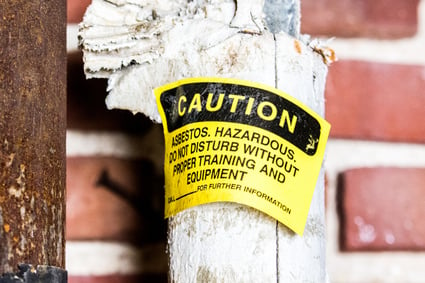 For many housing organizations, asbestos remains a concern because of the age of their building stock. OSHA standards require organizations to identify where asbestos-containing materials may be present and to avoid disturbing them without proper planning and controls.
Senior Loss Control Consultant Sarah Barger stressed that problems often arise when employees drill, cut, sand, remove, or repair suspect materials without first reviewing available asbestos information.
For older properties, asbestos records should be readily available and incorporated into maintenance and renovation planning.
Organizations can reduce risk by:
- Reviewing asbestos information before intrusive work begins
- Maintaining accessible asbestos records
- Communicating hazards to employees and contractors
- Using licensed professionals when abatement is required
Additional risks to monitor
The Workers' Compensation Trust also highlighted additional hazards that can arise within housing organizations:
- Bloodborne pathogens
- Abrasive wheel machinery
- Personal protective equipment (PPE)
- Respirable crystalline silica
- Lockout/tagout
These hazards typically emerge during maintenance work, capital projects, groundskeeping activities, and equipment repairs. Bloodborne pathogen exposures may occur when staff encounter bodily fluids or contaminated materials. Abrasive wheel machinery citations often involve grinders with missing guards or improper setup. PPE violations occur when employees lack appropriate eye, hand, respiratory, or hearing protection.
Hunter encouraged attendees not to overlook everyday hazards.
"I have seen really tough accidents happening with simple things like drain cleaners and bleach,” Hunter said. “If we’re going to use it, are we using the right PPE and the goggles?"
Silica exposure remains a concern during drilling, cutting, grinding, and demolition work involving concrete, masonry, tile, and stone products. Lockout/tagout violations occur when equipment is serviced without properly isolating energy sources, creating the risk of unexpected startup or the release of stored energy.
Hazard assessments: The foundation of OSHA compliance
 Before discussing citations, the presenters emphasized hazard assessments as one of the most effective tools for identifying risks before OSHA or an injured employee does.
"We want to check for compliance and look for the gaps,” Hunter said. “It’s basically a gap analysis. Improve the programs, reduce injuries and claims, and implement best practices.”
Hazard assessments should evaluate:
- Physical workplace conditions
- Written safety programs
- Employee training records
- Incident and near-miss history
- Operational or environmental changes
Hunter also encouraged housing organizations to look beyond what is immediately visible during a walkthrough.
"We get hung up on physical inspections because it's easy," Hunter said. "You walk through, you see something, and you're going to see what needs to be done. What you need to think about is that the physical parts of facilities change. Programs can tell you more because you get to see what you are doing and what you are trying to do."
Getting participation from organizational leadership is also critical.
"Even if they're not doing the day-to-day, they need to be involved," Hunter said. "From the employee perspective, how does that bolster your safety program if the highest person in the organization has embraced it? Confidence. I know that the person I work for, the highest person in the organization, cares about me and cares that I go home safe every day."
Organizations should revisit hazard assessments whenever operations change significantly, major projects begin, new equipment is introduced, or emerging risks develop.
Building a stronger safety culture
Addressing OSHA compliance is not simply about avoiding citations. The standards discussed during the session provide a roadmap for identifying risks before they lead to injuries, illnesses, property damage, or costly enforcement actions.
Many of the most frequently cited violations stem from issues that develop over time: an emergency exit blocked by storage, an unlabeled chemical bottle in a maintenance shop, a damaged extension cord that never gets replaced, or a renovation project that proceeds without reviewing asbestos records. Individually, these issues may seem minor; however, combined, they can create significant risk. That is why regular hazard assessments, employee involvement, leadership commitment, and consistent inspections remain critical components of an effective safety program.
"All the pieces of hazard assessments and risk management all come down to keeping people safe and keeping your business safe," Hunter said.
For housing organizations managing properties, maintenance operations, capital projects, and resident services, that commitment to prevention remains one of the most effective tools for protecting employees, strengthening operations, and creating safer communities.
Strengthen workplace safety with the Housing Training Institute
The HAI Group Housing Training Institute offers on-demand training and certification programs for housing professionals and the organizations that support them. Its catalog covers public housing management, asset management, compliance, risk management, cybersecurity and more, including courses designed to help learners recognize workplace hazards, understand safety requirements and take steps to reduce risk.
Explore these recommended courses:
- Bloodborne Pathogens
- Electrical Safety
- Eye Protection
- OSHA and Workplace Safety - Exit Routes, Fire Safety, and Emergency Planning
- OSHA and Workplace Safety - Introduction and Hazard Communications
- OSHA and Workplace Safety - Tool and Electrical Safety
- OSHA and Workplace Safety - Walking, Working Surfaces, and Personal Protective Equipment
HAI Group policyholders: The Risk Control and Consulting team is available to support you through on-site surveys, staff and resident training, programs and contests, and more. Reach out to your designated risk control consultant to learn more.