
The Enfield Housing Authority (EHA) is taking a major step toward strengthening housing options for older adults and people with disabilities with the redevelopment of Enfield Manor. After 15 years of planning, EHA has broken ground on a transformative project that will replace aging buildings with modern, accessible homes designed to support resident well-being and long-term sustainability.
Kelly McElwain, director of research at the Public and Affordable Housing Research Corporation (PAHRC), wrote a feature on this milestone and the innovative approach EHA used to make it possible. The piece is highlighted in NERC NAHRO’s Community Spotlight and below.

How Enfield Housing Authority Reimagined Enfield Manor for the Future
The Enfield Housing Authority (EHA) supports more than 500 households across the community. In the fall of 2025, EHA and its development partner, Tobacco Valley Development Corporation (TVDC), celebrated a major milestone: breaking ground on the redevelopment of Enfield Manor. This initiative ensures that older adults and people with disabilities can continue living affordably in Enfield while also creating more homes to meet the community’s growing needs
In January 2026, Kristina Tatroe, director of HAI Group online Training, and Kelly McElwain, director of research with PAHRC, visited Enfield in January to see the project's progress. Scott Bertrand, CEO of TVDC and chief planning and development officer at EHA, provided tours of the current Enfield Manor and the upgraded property.
Why Enfield Manor needed reinvestment
Enfield Manor was originally constructed in the 1960s and included 80 studio and one-bedroom apartments for older adults and people with disabilities. Over time, the buildings’ systems aged and became obsolete. As a result, maintenance costs increased, and the property required a comprehensive overhaul to stay safe, habitable, and financially viable to operate.
Building a sustainable, connected community
After 15 years of planning and persistence, TVDC secured the funding to completely rebuild the property. The transformation will replace the original units with 99 modern, affordable homes developed across two phases.

Rendering of Enfield Manor.
As EHA’s Executive Director Shari Riddick stated, the goal is much bigger than rebuilding old buildings: “Our goal for this housing redevelopment project is to create a vibrant, inclusive community where everyone feels they belong. We hope to improve the quality of life by providing safe, modern, and affordable housing. This project is designed to create shared spaces that encourage connection and ensure sustainability through environmentally friendly practices.”
The redesigned property will support resident health and wellness, and lower EHA’s long-term operating costs.
Key features include:
-
More green space, benches, a walking path, and private areas with natural light and outdoor access to support an active lifestyle and reduce isolation.
-
Emergency access roads to improve safety.
-
Expanded community spaces for crafting, exercise, and social events to promote social engagement among residents.
-
On-site staff, including a program coordinator and a resident services coordinator, will support resident needs.
-
A new building layout that replaces 17 aging single-story buildings with two mid-rise buildings to maximize homes and site efficiency.
-
ADA-compliant units to ensure residents can comfortably age in place.
-
Laundry and trash rooms will be located inside the buildings for easier resident access.
-
Energy-efficient elements to reduce utility costs, such as:
-
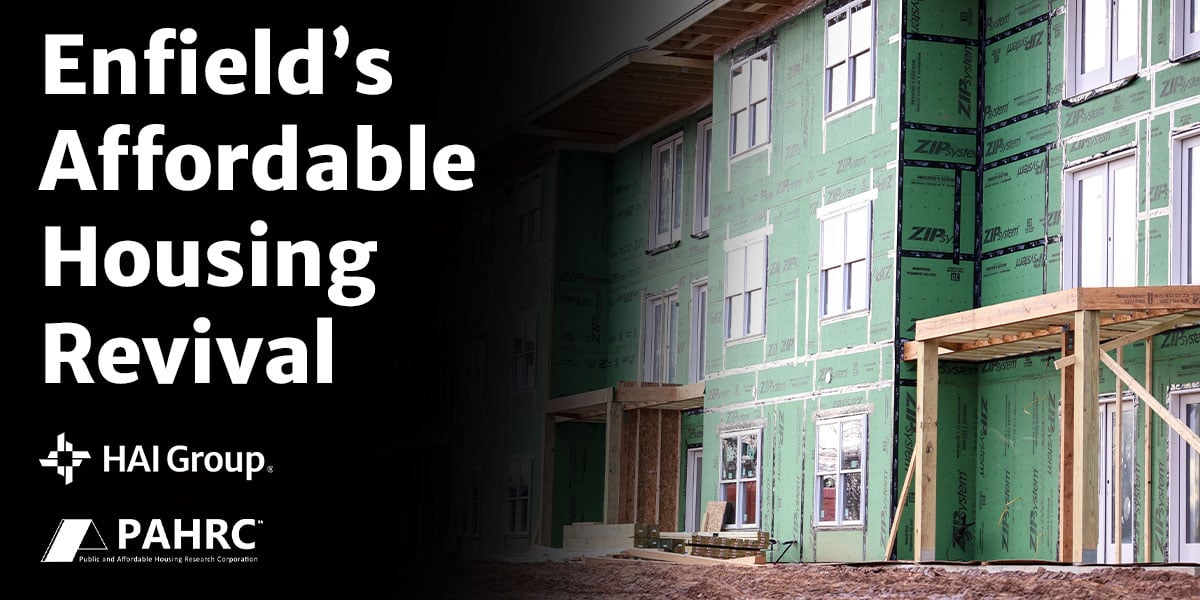
Featuring a Zip System design on the exterior of the building to reduce air leaks by ensuring a continuous pane of insulation.
- Installation of electric heat pumps to provide the building with heating and cooling, which are estimated to reduce energy costs for heating by 75% compared to furnaces and baseboard heaters.
- The property is also designed to add solar panels at a later date.
-
- Air conditioning to improve the quality of life and protect residents from the risks posed by extreme heat.
These changes reflect the design standards of various funders and address essential resources for older adults and people with disabilities to live healthy lives. The site’s proximity to public transit, stores, and medical offices keeps residents connected to the community.
How EHA made redevelopment possible
Originally financed through Connecticut’s State-Sponsored Housing Portfolio, Enfield Manor required a creative approach to secure funding to modernize the property. EHA partnered with TVDC, a nonprofit organization that the agency had established, to access funding sources that housing authorities are typically restricted from accessing to redevelop the property.
TVDC secured millions to redevelop the property through a mix of state programs and other funding sources, including:
| Program | Funding |
| Connecticut Housing Finance Authority Tax-Exempt Bond Construction Financing | $23.8 million |
| 4% Low Income Housing Tax Credit | $19.8 million |
| Sponsor Loans | |
| Department of Housing | $4 million |
| HUD | $6.79 million |
| State of Connecticut Community Investment Fund 2030 | $11.3 million |
| Connecticut’s Housing Tax Credit Contribution program | $337,921 |
| Energy | $377,000 |
| Department of Housing | $300,000 |
| EHA Seller Loan | $620,000 |
They also secured rental assistance through HUD’s Supportive Housing for the Elderly Program, and EHA awarded 22 Project-Based Vouchers and five Veteran Affairs Support Housing (VASH) vouchers to the property to ensure that units remain affordable to veterans and older adults with the lowest incomes.
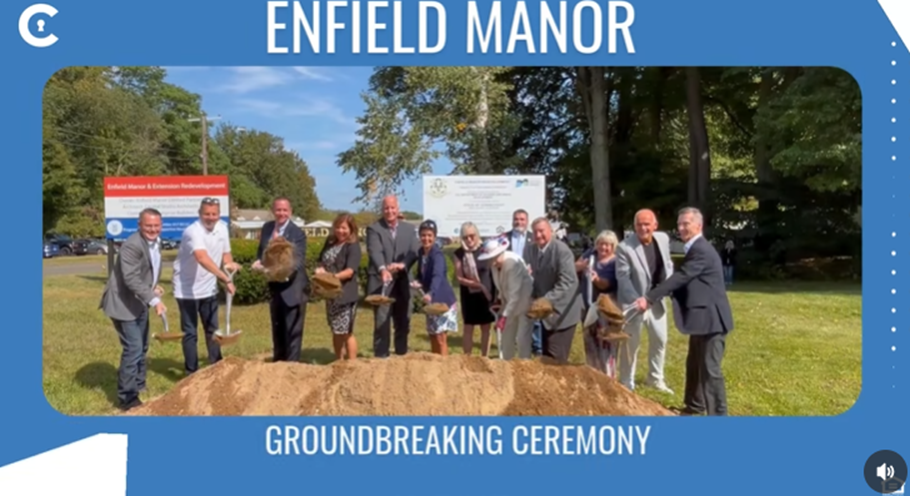
Enfield Manor groundbreaking ceremony.
Keys to success
EHA and TVDC’s experience offers valuable lessons for other organizations working to preserve aging affordable housing:
Stay committed
Large redevelopment projects take time. EHA and TVDC spent 15 years planning, scaling up their capacity, and applying for funding. Patience and persistence are essential when preserving properties with major capital needs. To bring these projects to scale, look out for new funding notices and be prepared to apply.
Invest in your development team
Having staff skilled in complex financing, especially the Low-Income Housing Tax Credit (LIHTC) program, is crucial. Training, certifying, and recruiting team members with strong development and asset management expertise can equip housing authorities to successfully take on these deals. Additionally, establishing a nonprofit affiliate can enable housing authorities to access LIHTC funding. While this meant a steep learning curve, it positioned EHA and the developer it founded to have more control over the redevelopment of Enfield Manor.
Build your network
Local conferences and statewide gatherings offer valuable opportunities to meet funders, developers, and peers. These connections can lead to new partnerships, learn best practices, and secure new funding.
Bring in strong partners
Securing a strong team of architects, engineers, and consultants was essential to make this redevelopment possible. Newcastle Housing Ventures provided valuable consulting on the property’s financing, Capital Studio Architects designed the property, and Enterprise Builders is completing construction. Support from funders, residents, the local community, elected officials, Enfield’s planning and zoning department, and EHA staff was also critical to ensuring Enfield Manor’s successful redevelopment.
Start with a clear strategy
Pre-development funding helped EHA and TVDC map out the redevelopment and plan how to keep daily operations running smoothly during construction. Prioritizing early planning can help housing authorities avoid surprises and maintain essential services throughout the redevelopment process.
Turn challenges into opportunities
When EHA needed to convert its nonprofit development entity into an independent organization, it used the opportunity to support succession planning. EHA’s longtime CEO Scott Bertrand transitioned to become the CEO of TVDC and EHA’s Chief Planning and Development Officer to solely focus on the redevelopment.
Building the foundation for a vibrant community
Phase one of the new Enfield Manor is expected to welcome back 44 residents in summer 2026, with the remaining 55 homes scheduled to open in 2027. Once complete, EHA will resume managing Enfield Manor, providing older adults with a stable home for years to come, offering new opportunities for connection and support, and ensuring that affordable housing remains a cornerstone of the Enfield community.
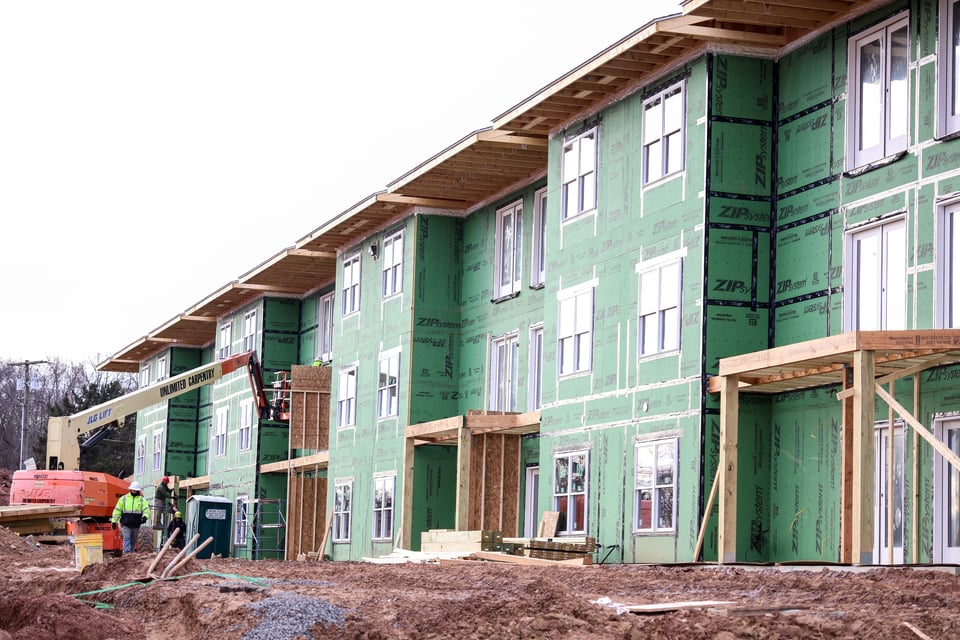
Construction of Enfield Manor.
Looking forward, EHA hopes to partner with the town of Enfield to increase affordable housing options for residents 55 and older through preservation or new development. They also welcome opportunities to collaborate with local affordable housing providers to expand their portfolio of managed properties. Meanwhile, TVDC hopes to help nearby communities redevelop affordable housing that would otherwise lack the internal capacity to do so.
“The new buildings will complement the neighborhood and greatly improve the standard of living for residents,” Bertrand explained “We hope Enfield Manor can be a model of what can be done to preserve obsolete properties in Connecticut’s state-sponsored housing portfolio.”
For more housing-related research, be sure to visit PAHRC's website or visit the HAI Group Resource Center by clicking the button below.